Kinds of Punches in Boxing: Master 6 Key
Why Understanding the Kinds of Punches in Boxing is Essential
The kinds of punches in boxing break down into six fundamental strikes that every fighter must master. These can be simplified into four main types—jab, cross, hook, and uppercut—with the six-punch system distinguishing between lead and rear hand variations.
Here are the six core punches:
- Jab (1) – A quick, straight punch with the lead hand to measure distance and set up combinations.
- Cross (2) – A powerful, straight punch with the rear hand that uses full hip rotation.
- Lead Hook (3) – A circular punch with the lead hand targeting the head or body from the side.
- Rear Hook (4) – A power hook thrown with the rear hand, often the most devastating.
- Lead Uppercut (5) – An upward punch from the lead hand, effective at close range.
- Rear Uppercut (6) – An explosive upward punch with the rear hand targeting the chin.
Boxing gyms use a standardized numbering system where odd numbers (1, 3, 5) represent lead hand punches and even numbers (2, 4, 6) represent rear hand punches. This allows coaches to easily call out combinations like “1-2-3” during training.
The jab is widely considered the most important punch because it provides its own cover, leaves minimal space for counters, and serves multiple purposes—from measuring distance to setting up power shots. Any punch other than a jab is classified as a power punch. This guide will break down each punch, explore proper technique, and show you how to build these strikes into effective combinations.
The Boxer’s Blueprint: Stance, Balance, and Power Generation
Before throwing a punch, a boxer’s foundationstance and balanceis paramount. A solid base is crucial for generating power and maintaining defense. Without it, punches lack impact, and you become vulnerable to counters.

A proper boxing stance keeps your feet shoulder-width apart with knees slightly bent and weight evenly distributed. This stable, low center of gravity allows for quick pivots and reactions. Power originates from the ground up, driving through the feet, hips, and shoulders. This rotation of the kinetic chain is what adds significant force to every strike. Always make a proper fist, with your thumb wrapped securely on the outside of your fingers to protect your hand.
Stance and Hand Roles
The two most common stances determine your lead and rear hands:
- Orthodox stance: For right-handed fighters. The left foot and left hand are forward (lead), while the right hand is back (rear).
- Southpaw stance: For left-handed fighters. The right foot and right hand are forward (lead), while the left hand is back (rear).
Your hands have distinct roles:
- Lead Hand: The hand closer to your opponent. It’s used for speed, measuring distance, setting up combinations, and defense. Lead punches are quick and tactical.
- Rear Hand: Your back hand, typically the more powerful one. It delivers devastating power punches like the cross and rear hook, which involve significant hip and shoulder rotation for maximum force.
Common Stance Mistakes to Avoid
- Being flat-footed: Limits mobility and power. Stay light on the balls of your feet.
- Stance too wide or narrow: A wide stance is slow, while a narrow one is unstable.
- Leaning too much: Leaning forward or backward throws off your center of gravity and leaves you open to counters.
The Core Arsenal: The 6 Basic Kinds of Punches in Boxing
Every boxer, from beginner to world champion, builds their offensive game around six fundamental kinds of punches in boxing. These aren’t just random strikes; they form a logical, interconnected system that allows for endless combinations and strategic versatility. To simplify communication and accelerate training, boxing gyms worldwide use a standardized boxing punch number system.
In this system, odd numbers (1, 3, 5) consistently represent punches thrown with our lead hand, while even numbers (2, 4, 6) are reserved for punches delivered with our rear hand. This numerical shorthand is incredibly efficient. When a coach yells “1-2-3!”, we immediately know it means a jab, followed by a cross, and then a lead hook. This allows us to focus on execution rather than remembering lengthy punch names, especially when moving quickly.
Let’s break down these core six punches:
| Number | Name | Hand | Primary Purpose |
|---|---|---|---|
| 1 | Jab | Lead | Measuring distance, setup, defense, disruption |
| 2 | Cross | Rear | Power punch, counterpunching, follow-up |
| 3 | Lead Hook | Lead | Circular attack to side of head/body, close range |
| 4 | Rear Hook | Rear | Power hook to side of head/body, close to mid-range |
| 5 | Lead Uppercut | Lead | Upward attack to chin/solar plexus, inside fighting |
| 6 | Rear Uppercut | Rear | Explosive upward attack to chin/solar plexus, knockout |
1. The Jab: Your Most Important Weapon
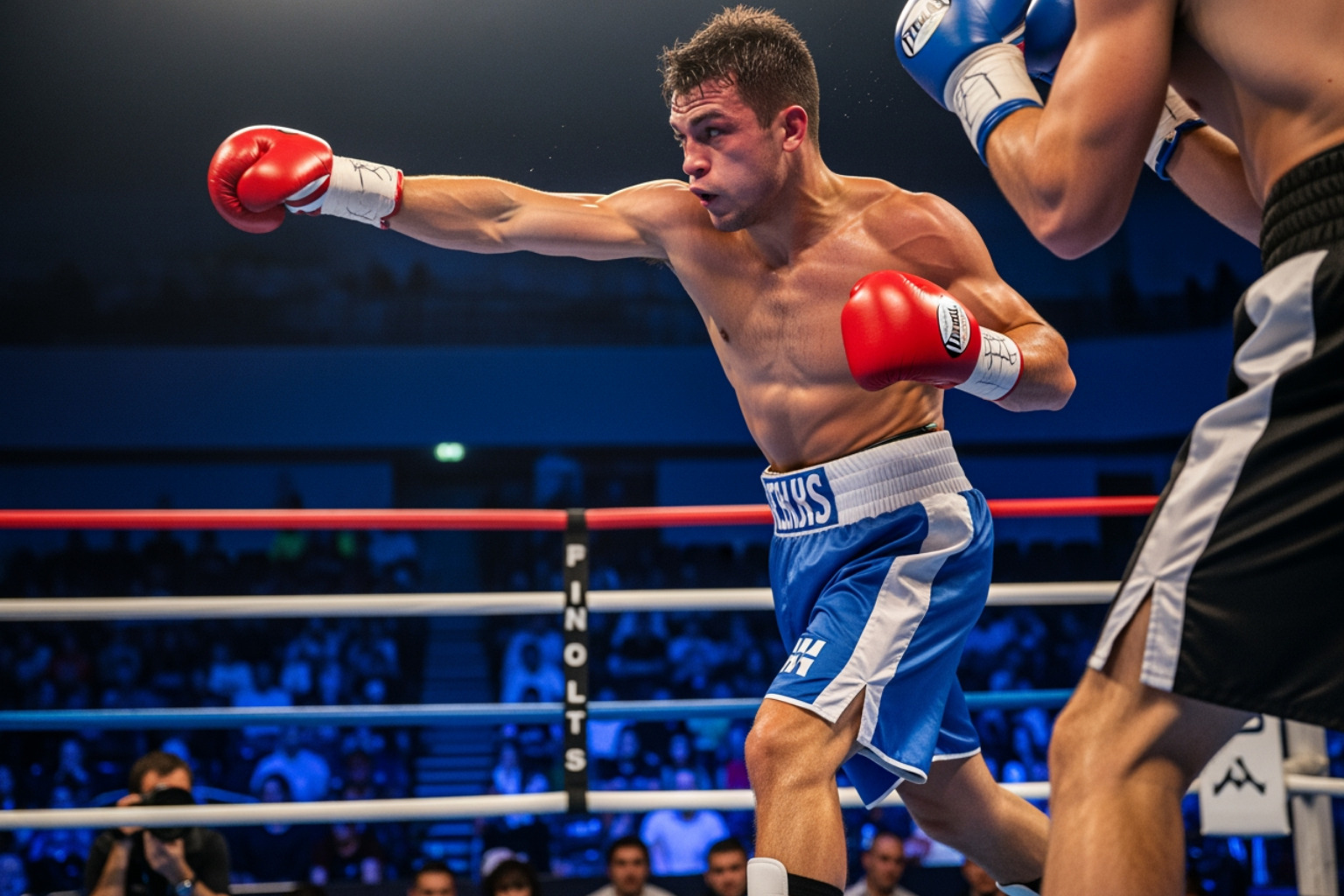
The jab (1) is often called the “bread and butter” of boxing for a reason. It’s the quickest, most versatile, and arguably the most important punch in a boxer’s arsenal. We throw it straight ahead with our lead hand.

Execution Technique: From our fighting stance, we extend our lead arm straight ahead, keeping our fist in line with our starting point, and then return it quickly to our guard position. It’s a rapid movement, not necessarily a powerful one. We push off the ball of our rear foot, transferring our body weight forward just enough to extend the strike without overcommitting.
Purpose:
- Measuring Distance: It helps us gauge how far away our opponent is.
- Setting Up Combinations: It creates openings for more powerful punches like the cross.
- Disruption: It can break an opponent’s rhythm, block their vision, or interrupt their attacks.
- Defense: A quick, stiff jab can fend off an opponent, parry their punches, or provide its own cover, leaving minimal space for a counter-punch.
Common Mistakes to Avoid:
- Overextending: Reaching too far compromises our balance and leaves us vulnerable. We should snap it out and back.
- Dropping Guard: After throwing the jab, we must quickly retract our hand to protect our face. Dropping it leaves us open.
- Lack of Snap: A good jab is quick and sharp, not a push. Focus on speed and retraction.
2. The Cross: The Straight Power Punch
The cross (2), also known as the straight right for an Orthodox fighter, is our primary power punch, thrown with our rear hand. It’s designed for maximum impact and is often delivered as a follow-up to a jab.
Execution Technique: To throw a cross, we pivot on our back foot, rotating our hips and angling our body forward. As we rotate, we extend our rear arm straight forward, utilizing the power generated from our hips and shoulders. We push off the ball of our rear foot, driving power from the ground up, through our torso, and into the punch. Our lead shoulder pulls back as our rear shoulder drives forward. We then rotate back to our stance, returning our hand quickly to our guard.
Difference between Jab and Cross: While both are straight punches, the jab is a quick, lead-hand strike primarily for setup and distance, involving less body rotation. The cross is a powerful, rear-hand strike involving significant hip and shoulder rotation, designed for maximum force. It’s the “power version” of the jab.
Purpose:
- Primary Power Punch: The cross delivers significant force, capable of ending fights.
- Counter-Punching: It’s incredibly effective as a counter, especially when an opponent overextends or after our jab has created a momentary opening.
Common Mistakes to Avoid:
- Telegraphing: Winding up or showing our intention before throwing the punch makes it easy for an opponent to see and react. Keep it tight and explosive.
- Lack of Rotation: Without full hip and shoulder rotation, the cross loses most of its power, becoming an arm punch. We need to engage our whole body.
- Not Returning Hand to Guard: Just like the jab, failing to retract our hand quickly leaves us exposed to a counter.
3. The Lead Hook: Attacking from the Side
The lead hook (3) is a circular punch thrown with our lead hand, designed to come around an opponent’s guard and target the side of their head or body. It’s particularly effective in close to mid-range.

Execution Technique: From our fighting stance, we rotate our body forward, transferring our weight onto our lead leg. We bring our lead arm up to shoulder-height with our elbow bent at approximately a 90-degree angle. We pivot on our lead foot while rotating our body to follow the fist, keeping our elbow bent and our hand-elbow alignment. The punch should feel like a powerful rotation of our torso, not just an arm swing.
Targeting: Hooks are versatile. We can aim for the side of the head (temple or jaw) or the body, such as the liver (a devastating body shot).
Difference between Hooks and Uppercuts: Hooks are horizontal or slightly downward circular punches delivered from the side, while uppercuts are vertical, upward-moving punches. They attack from different planes and are effective in different ranges.
Common Mistakes to Avoid:
- Wide Swings: Throwing a wide, looping hook is easily seen, telegraphed, and loses power. We want a tight, compact arc.
- Poor Balance: Over-rotating or not pivoting correctly can cause us to lose balance, leaving us off-kilter and open.
- Dropping the Elbow: Our elbow should stay up, in line with our fist, throughout the punch. Dropping it reduces power and makes the punch less effective.
4. The Rear Hook: The Power Hook
The rear hook (4) is often considered one of the most powerful kinds of punches in boxing, delivered with our dominant rear hand. It’s similar in motion to the lead hook but generates even more force due to the full body rotation from our power side.
Execution Technique: We start in our fighting stance, bringing our rear arm to shoulder height with our elbow bent at a 90-degree angle. We pivot strongly on our rear foot while rotating our hips and body counterclockwise (for Orthodox), keeping our elbow bent and our hand-elbow alignment. The power comes from twisting our back hip and torso, propelling the fist through a tight, curved path. This massive rotation allows us to generate maximum power, often making it a knockout punch.
When to Use It: The rear hook is excellent as a follow-up to a jab or cross, especially if our opponent is leaning in or has their guard focused straight ahead. It can also be devastating when an opponent is moving away, catching them on the retreat.
Common Mistakes to Avoid:
- Telegraphing the Punch: Just like the cross, winding up or making obvious preparatory movements allows our opponent to see it coming. Keep it tight and explosive.
- Wide Arc: A wide, looping rear hook is slow and inefficient. We aim for a compact, powerful arc.
- Not Turning the Hip: The power of the rear hook comes directly from our hip rotation. If we don’t turn our hips completely, we lose significant force.
5. The Lead Uppercut: The Inside Powerhouse
The lead uppercut (5) is a vertical, upward-moving punch thrown with our lead hand. It’s incredibly effective in close-range situations, designed to come up under an opponent’s guard.

Execution Technique: From our fighting stance, we slightly bend our knees into a low squat, dropping our lead arm to about a 90-degree angle from our body. We then explosively drive our fist upwards into a punch, keeping our elbow bent and tight to our body. The power for this punch comes significantly from our legs and core, as we drive upwards from the squat position.
Effectiveness: The lead uppercut thrives in “inside fighting” scenarios when we’re close to our opponent and their head might be dipping or their guard is high, leaving their chin or solar plexus exposed.
Targeting: The primary targets are the chin, which can lead to knockouts, and the solar plexus, which can take the wind out of an opponent.
Common Mistakes to Avoid:
- Overextending: Punching too far upwards can cause us to lose balance and leave our chin exposed. Keep it controlled and compact.
- Dropping the Guard: As we throw the uppercut, our other hand must remain glued to our chin to protect us from counters.
- Insufficient Hip Drive: While leg drive is key, integrating a slight hip rotation adds even more power. Without it, it’s just an arm punch.
6. The Rear Uppercut: The Knockout Finisher
The rear uppercut (6) is an explosive, upward-moving punch delivered with our rear hand. It’s a true knockout finisher, packing immense power from our dominant side and full body engagement.
Execution Technique: We bend our knees into a low squat, dropping our rear arm to a 90-degree angle from our body. We pivot strongly on our back foot and rotate our hips and body upwards as we drive our fist upwards, keeping our elbow bent and tight. This punch combines powerful leg drive with significant hip and shoulder rotation, creating a devastating upward force.
How to Set Up the Rear Uppercut: This punch is often set up when an opponent is moving forward, ducking, or has their head on our chest in close quarters. A jab or a lead hook can also force them to cover high, leaving the lower chin open for the uppercut.
Common Mistakes to Avoid:
- Leaning Too Far: Leaning forward excessively while throwing the uppercut throws off our balance and makes us vulnerable. We need to maintain a strong, upright posture.
- Insufficient Leg Drive: The power of this punch comes from the ground up. If we don’t engage our legs and drive upwards, the punch will be weak.
- Not Guarding the Chin: Just like with the lead uppercut, our lead hand must stay high to protect our chin while our rear hand is extended.
Building Your Attack: Combinations and Advanced Punches
Once you’ve mastered the individual kinds of punches in boxing, the real art begins: combining them. A combination is a series of punches thrown in rapid succession to overwhelm an opponent, create openings, and penetrate their guard.
Basic combinations are the building blocks of more complex attacks. The classic “1-2” (jab-cross) is fundamental, while adding a lead hook creates the “1-2-3” (jab-cross-lead hook) to attack from different angles. The key is to practice these until they flow seamlessly. When creating your own combinations, think about changing angles and levels (head vs. body). Practicing combinations builds muscle memory, improves timing, and teaches you to maintain balance while attacking.
Common Mistakes with Combinations to Avoid
- Losing Balance: Throwing multiple punches can shift your weight improperly, leaving you unstable and vulnerable.
- Forgetting Defense: Dropping your non-punching hand or failing to return your punching hand to guard quickly leaves you open for counters.
- Becoming Predictable: Repeatedly throwing the same combination makes it easy for an opponent to time and counter. Mix up your attacks.
- Sacrificing Form for Speed: Rushing through combinations can lead to sloppy technique and a loss of power. Focus on clean execution first.
Advanced and Unorthodox Punches
Beyond the core six, several advanced strikes can add an element of surprise. These are best used after mastering the fundamentals, as they often require precise timing and setup.
- Overhand: A looping rear-hand punch that comes down over an opponent’s guard.
- Shovel Hook: A hybrid between a hook and an uppercut, thrown with a short, vertical arc to the body.
- Bolo Punch: A flashy, winding uppercut with a wide arc, often used as a distraction.
- Check Hook: A defensive lead hook thrown while pivoting away to counter an aggressive opponent and create space.
- Gazelle Punch: A leaping punch, often a lead hook, used to close distance quickly.
- Corkscrew Punch: A straight punch where the fist rotates on impact to penetrate a guard.
Common Mistakes with Advanced Punches
- Telegraphing: Complex movements can signal your intention.
- Poor Timing: Throwing these at the wrong moment leaves you open.
- Poor Defense: Many advanced punches require significant commitment, which can compromise your guard. Practice them slowly on a bag or with a coach before using them in sparring.
Ring IQ: Strategy, Defense, and Training
Boxing is “the sweet science” because strategy and defense are as important as offense. Effective defense creates opportunities to attack. Key defensive techniques include evading (slipping, bobbing, weaving) and blocking (parrying, using gloves and arms). A knockout punch isn’t just about raw power; it’s about precision and timing, often targeting the chin or temple.
Strategically, boxers often adopt one of four primary styles:
- Swarmer (In-Fighter): Fights aggressively at close range with relentless hooks and uppercuts (e.g., Mike Tyson).
- Out-Boxer: Uses long jabs, footwork, and distance to control the fight and set up counters (e.g., Muhammad Ali).
- Slugger: Prioritizes raw power over finesse, planting their feet to deliver heavy blows (e.g., George Foreman).
- Boxer-Puncher: A versatile hybrid combining the technical skill of an out-boxer with the power of a slugger (e.g., Canelo Alvarez).
How to Practice on a Boxing Bag
The boxing bag is essential for translating theory into muscle memory.

- Choosing a Bag: Heavy bags build power, speed bags improve timing, and double-end bags improve accuracy and head movement. A heavy bag is a great start for beginners.
- Focus on Technique First: Start with light punches to perfect your form before gradually increasing power.
- Use Footwork: Move around the bag, pivot, and step in and out to simulate real fight movement.
- Drill Combinations: Once individual punches feel natural, link them into combinations like the “1-2-3.”
Common Bag Work Mistakes
- Standing Still: Develops bad habits and makes you a stationary target.
- Hitting Too Hard Too Soon: Can cause injury and reinforce poor technique.
- Not Protecting Hands: Always wear hand wraps and boxing gloves.
Frequently Asked Questions about Boxing Punches
Here are answers to some common questions about the kinds of punches in boxing.
What are the four main categories of punches in boxing?
The six basic punches fall into four main categories based on their trajectory:
- Jab: A quick, straight punch with the lead hand.
- Cross: A powerful, straight punch with the rear hand.
- Hook: A circular punch (lead or rear) that targets the side of an opponent.
- Uppercut: A vertical, upward punch (lead or rear) that targets the chin or body.
The six-punch system simply distinguishes between the lead and rear hand versions of these strikes.
What is the difference between an orthodox and a southpaw boxer?
The difference is their stance, which is usually based on their dominant hand:
- Orthodox: A typically right-handed boxer who stands with their left foot and left hand forward. The left is the lead hand, and the right is the rear (power) hand.
- Southpaw: A typically left-handed boxer who stands with their right foot and right hand forward. The right is the lead hand, and the left is the rear (power) hand.
This reversal creates different angles of attack and defense, posing unique strategic challenges.
Why is the jab considered the most important punch?
The jab is the most important punch because of its versatility and low risk.
- Offense: It measures distance, sets up power shots, and disrupts an opponent’s rhythm.
- Defense: It provides cover, minimizes counter opportunities, and can keep an opponent at bay.
It is the foundational tool for controlling the pace and distance of a fight.
Conclusion: Master the Fundamentals, Release Your Power
We’ve journeyed through the core kinds of punches in boxing, from the tactical jab to the knockout rear uppercut. We’ve explored the crucial role of stance and balance, dissected the mechanics of each strike, and touched upon how to build devastating combinations. Mastering these six basic punches—jab, cross, lead hook, rear hook, lead uppercut, and rear uppercut—is the cornerstone of effective boxing.
The path to becoming a skilled boxer isn’t about flashy moves right away; it’s about relentless, consistent practice of the fundamentals and perfecting proper form. These basics build the strong foundation upon which all advanced skills, intricate combinations, and strategic brilliance can be developed. Every champion started right here, drilling these very punches until they became second nature.
Ready to put these insights into action? With the OOWEE app, you can get personalized, voice-guided Boxing and Muay Thai training that fits your schedule. Our customizable workouts, complete with vocal cues that seamlessly integrate with your background music, make mastering these techniques fun and effective.
Start your training journey with us and open up your full punching potential!