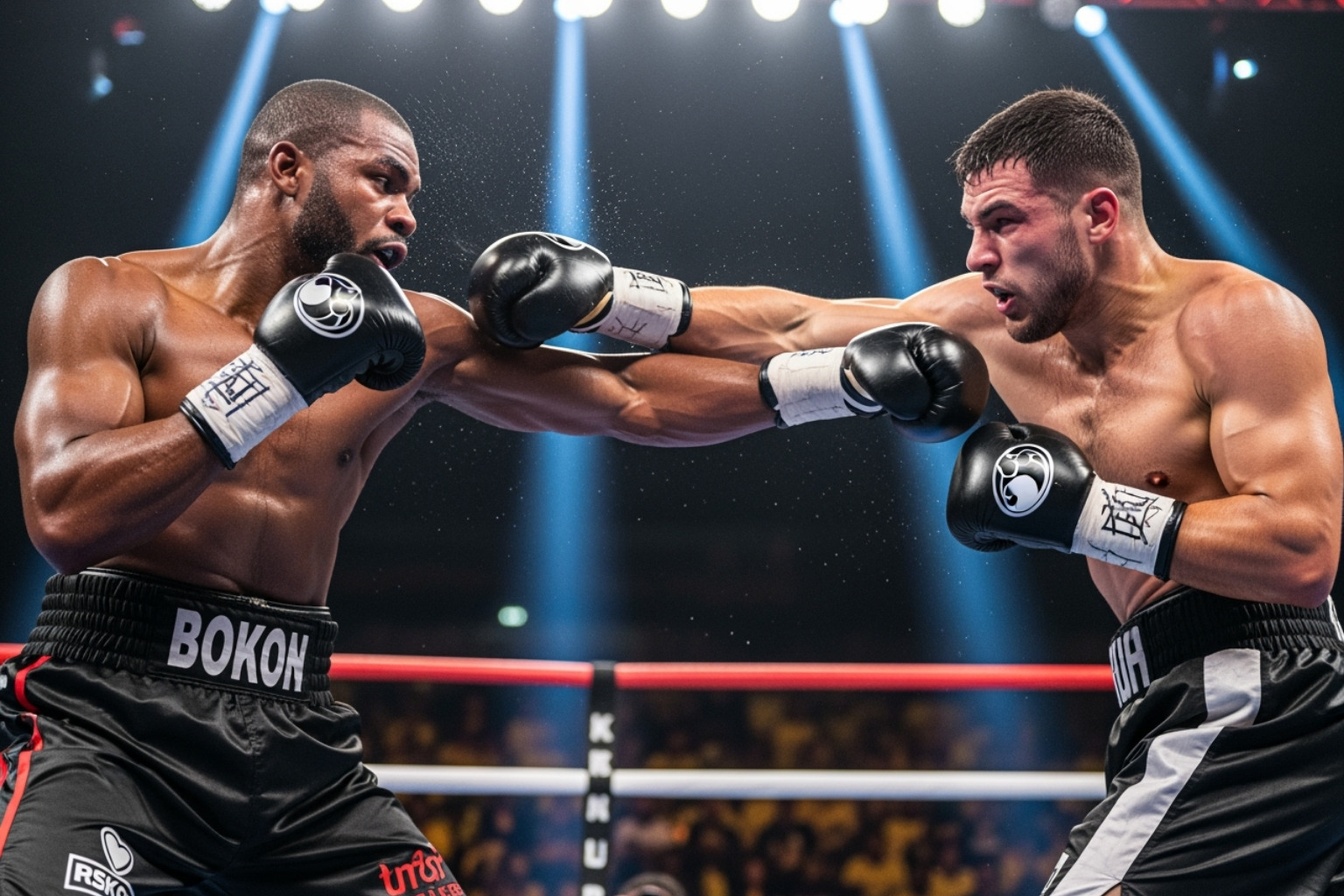
Different types of punching: Master 6 Key Strikes
Understanding the Art of the Punch
D11ifferent types of punching are the foundation of boxing, Muay Thai, and most striking martial arts. Understanding the various punches is essential for developing effective combinations and finding your unique style, whether you’re a beginner or a seasoned fighter.
The Six Basic Boxing Punches:
- Jab (1) – A quick lead-hand punch for distance control.
- Cross (2) – A powerful rear-hand straight punch.
- Lead Hook (3) – A circular punch with the lead hand.
- Rear Hook (4) – A power hook from the rear hand.
- Lead Uppercut (5) – A vertical punch from below with the lead hand.
- Rear Uppercut (6) – An explosive upward strike with the rear hand.
Beyond these fundamentals, martial arts feature dozens of specialized punches, from karate’s reverse punch to Bruce Lee’s one-inch punch. Each serves a specific purpose based on range, target, and strategy.
A jab might seem simple, but mastering its timing and distance control takes years. The journey to proficiency starts with understanding what each punch does and when to use it.

This guide breaks down the essential punches, explains the punch numbering system, and explores how different martial arts approach striking. You’ll learn proper technique, how punches fit into fighting strategies, and which training tools develop power and precision.
The Building Blocks: Punching Fundamentals and the Number System
An effective punch is a full-body movement requiring coordination and balance. Before mastering different types of punching, you must understand the fundamentals. Power flows from your feet, through your body, and out your fist. A break in this chain reduces power and effectiveness.
Your stance is your foundation. It’s the platform for your offense and defense. The two primary stances are:
- Orthodox: For right-handed fighters, with the left foot and hand forward. The right hand is the rear power hand.
- Southpaw: For left-handed fighters, with the right foot and hand forward. The left hand becomes the power weapon.
Your guard protects you. Keep your hands by your chin and temples, elbows tucked to shield your ribs. Your guard is the start and end point for every punch.
Power generation starts in your feet and travels up the kinetic chain. Your legs drive, your hips rotate, and your core engages to transfer force into the target. Hip rotation is crucial, as it multiplies the power of your punch.
Safety Considerations
Protecting your hands is essential when practicing different types of punching. Your hands have many small bones not designed for repeated impact.
Proper hand wraps provide critical support to keep bones and joints aligned. Gloves add padding and shock absorption. Never skip wrapping, as a hand injury can sideline you for months. Learn The Proper Way to Wrap Your Hands before training.
The Boxing Punch Number System
Boxing uses a simple punch numbering system to communicate combinations quickly. Instead of saying “jab-cross-hook,” a trainer calls out “1-2-3,” building muscle memory for common sequences.
For an orthodox fighter:
- Odd numbers (1, 3, 5): Lead hand (left) punches.
- Even numbers (2, 4, 6): Rear hand (right) punches.
This system becomes second nature. A “1-2” is a jab-cross, while a “3-2” is a lead hook-cross. It simplifies learning and communication. We’ll use this system throughout the guide.
The Six Basic Boxing Punches Explained
Mastering the six core punches is the key to any effective striking game. Consistent practice builds the muscle memory needed to execute them quickly and powerfully. They are the foundation for all complex combinations.
Here’s a comparison of the four main punch types:
| Punch Type | Range | Speed | Power | Primary Purpose |
|---|---|---|---|---|
| Jab | Longest | Very High | Low-Mod | Distance control, setup, defense, disrupt opponent |
| Cross | Medium-Long | High | High | Power shot, follow-up, knockout potential |
| Hook | Short-Medium | Medium-High | Medium-High | Attack side of head/body, off-balance opponent |
| Uppercut | Short | Medium | Medium-High | Close-range attack under guard, lift opponent’s head |
Let’s break down these essential different types of punching:
1. The Jab
The jab (1) is a quick, straight punch with the lead hand. It’s arguably the most important punch in boxing due to its versatility.
- Purpose: Gauging distance, setting up power punches, defense, and disrupting an opponent’s rhythm.
- Execution: Quickly extend your lead arm straight forward without telegraphing the movement. The power comes from speed. Retract your fist just as quickly back to your guard.

2. The Cross
The cross (2) is your primary power punch, delivered with the rear hand. It’s a powerful straight punch that often follows a jab in the classic “1-2” combination.
- Purpose: To land a significant, damaging blow, often aiming for a knockout.
- Execution: Pivot your rear foot while rotating your hips and torso forward. Extend your rear arm straight, driving force from your entire body into the fist. Keep your lead hand in guard.
3. The Lead Hook
The lead hook (3) is a circular punch with the lead hand, effective at close to mid-range. It’s designed to get around an opponent’s guard.
- Purpose: To target the side of the head or body, bypassing a frontal guard.
- Execution: Rotate your body and pivot on your lead foot, bringing your lead arm up with the elbow bent at a 90-degree angle. Power comes from hip and body rotation.
4. The Rear Hook
The rear hook (4) is a power version of the hook, thrown with the rear hand. It’s a devastating punch often used in combinations.
- Purpose: To deliver a heavy blow to the head or body, often catching an opponent off-guard.
- Execution: Pivot on your rear foot, twisting your hips and torso forcefully. Bring your rear arm up with the elbow bent, arcing the punch into the target.
5. The Lead Uppercut
The lead uppercut (5) is a vertical, upward punch with the lead hand, used in close range.
- Purpose: To break through a high guard, targeting the chin or solar plexus. It’s a key weapon in infighting.
- Execution: Slightly bend your knees, then drive upwards explosively from your legs and hips. Bring your lead fist vertically upwards with your elbow bent.
6. The Rear Uppercut
The rear uppercut (6) is an explosive upward punch with the rear hand, also for close-quarters combat.
- Purpose: To deliver a devastating blow to the chin or solar plexus, creating space or capitalizing on a low guard.
- Execution: Bend your knees, pivot on your rear foot, and rotate your hips and body upwards, driving your rear fist vertically into the target.
Beyond Boxing: A Look at Different Types of Punching in Martial Arts
Beyond the boxing ring, the broader world of martial arts offers a fascinating array of different types of punching techniques. While boxing perfects the fist under specific rules, disciplines like Muay Thai, Karate, and MMA integrate punches into a larger arsenal of kicks, knees, and elbows. This context changes how and when punches are thrown.
Karate Punches: A Different Approach to Punching
Traditional Karate’s punches, or Tsuki (thrusts), focus on linear power and precision for a single, decisive strike. The mechanics differ from boxing, often using the Seiken (Fore-fist) to concentrate impact on the front two knuckles. Many Karate punches also use a chambered position, where the non-punching hand pulls back to the hip to generate recoil.
- Gyaku-zuki (Reverse Punch): A powerful straight punch with the rear hand, similar to a boxing cross but with a chambered recoil and a focus on thrust.
- Oi-Zuki (Lunge Punch): A lunge forward while punching with the lead hand, driving body weight directly into the strike.
Advanced Strikes: Exploring Unique Types of Punching
Martial arts feature many creative and high-risk strikes. Here are some of the most interesting different types of punching you’ll find:
- Superman Punch: Popular in MMA and Muay Thai, this involves faking a kick to launch into an airborne straight punch, generating massive power and surprise.
- Overhand Punch: An arcing punch that comes over an opponent’s guard, carrying knockout power by dropping your weight into the strike.
- Spinning Back Fist: A high-risk 360-degree spin that delivers a devastating blow with the back of the fist if it connects.
- One-Inch Punch: Made famous by Bruce Lee, this punch generates incredible force from a minimal distance through perfectly coordinated full-body mechanics. The intriguing science behind Bruce Lee’s one-inch punch shows it’s physics, not magic.
- Chain Punch: From Wing Chun, this is a rapid-fire barrage of straight punches aimed at overwhelming an opponent with continuous pressure.
- Haymaker Punch: A wide, telegraphed swing seen in street fights. While powerful if it lands, it’s rarely used by trained fighters due to the defensive openings it creates.
From Technique to Tactics: How Punches Define Fighting Styles
Understanding the mechanics of different types of punching is the first step. The next is learning how to apply them strategically. A fighter’s style, physical attributes, and game plan determine their punch selection. For example, a tall fighter with a long reach will likely favor the jab, while a shorter, stockier fighter may excel with inside hooks and uppercuts. This strategic application is known as ring generalship.
Offensive Strategies and Punch Choice
Different fighting philosophies rely on specific punches:
- Swarmer: Pushes forward relentlessly, overwhelming opponents with a high volume of close-range hooks and uppercuts.
- Out-Boxer: Uses footwork and distance, controlling the fight with the jab and landing sharp crosses from the outside.
- Slugger: Hunts for a single knockout blow, often relying on powerful haymakers and overhands while trading raw power for finesse.
- Boxer-Puncher: A versatile hybrid who blends technical skill with knockout power, using all punches to adapt to any situation.
- Counterpuncher: A patient fighter who uses defense to create openings, punishing an opponent’s mistakes with perfectly timed counter-strikes.
Essential Training Tools for Practice
Developing your style requires consistent training with the right equipment. Each tool helps build specific skills for different types of punching:
- Heavy Bag: Builds power and endurance.
- Focus Mitts: Develops accuracy, timing, and combination flow with a partner.
- Speed Bag: Improves hand-eye coordination and shoulder endurance.
- Double-End Bag: Sharpens timing and defensive head movement.
- Thai Pads: Used for absorbing powerful punch and kick combinations.
Modern tools like voice-guided training apps allow you to practice these techniques anywhere, adapting to your level and helping you build skills consistently. Personalized coaching helps develop proper form and effective combinations at your own pace.
Frequently Asked Questions about Punching Techniques
Here are answers to common questions about different types of punching.
What is the most important punch to learn first?
Start with the jab. It is the most important and versatile punch, forming the foundation for everything else. The jab is used to control distance, set up power punches, play defense, and disrupt an opponent’s rhythm. Mastering the jab is the first step for any great fighter.
What is the difference between a punch and a strike?
A punch is a specific type of blow delivered with a closed fist, making contact with the knuckles (e.g., jab, cross, hook). A strike is a broader term for any impact using any part of the body. This includes punches, but also kicks, knee strikes, elbow strikes, and open-hand techniques like a palm strike.
In short: all punches are strikes, but not all strikes are punches.
How can I increase my punching power?
Punching power comes from technique and full-body coordination, not just arm strength. To increase your power, focus on these three areas:
- Proper Technique: Power originates from the ground up. Drive with your legs, rotate your hips and torso, and transfer that energy through your core and into your fist. This kinetic chain is the source of real power.
- Consistent Practice: Use equipment like a heavy bag to drill your form. Focus on full-body rotation and punching through the target. As your technique improves, you can increase intensity.
- Strength and Conditioning: Support your technique with exercises that build explosive power. Squats, deadlifts, plyometrics, and rotational core work are excellent for amplifying the force of your punches. Also, work on hand speed, as a fast, snappy punch can be incredibly powerful.
Master Your Strikes and Release Your Potential
You’ve now explored the landscape of different types of punching, from boxing’s six fundamental strikes to specialized martial arts techniques. We’ve seen how each punch fits into various fighting styles and strategies.
However, understanding is just the beginning. Real progress comes from consistent practice and proper form. Building muscle memory through dedicated drilling is how you learn to throw powerful, accurate punches instinctively. Always remember the safety considerations—wrap your hands, use proper gloves, and focus on fundamentals to ensure you can train safely for years to come.
While a guide provides knowledge, qualified instruction is invaluable for correcting form and preventing bad habits. Modern training technology can also help bridge this gap. The OOWEE app offers personalized, voice-guided Boxing and Muay Thai workouts that adapt to your skill level. Vocal cues guide you through techniques and combinations, seamlessly integrating with your music to keep you motivated.
Whether your goal is fitness, self-defense, or competition, the journey starts with fundamentals and regular practice. Learn how OOWEE works to see how voice-guided training can help you refine your technique and build your skills.
It’s time to wrap your hands, put on your gloves, and start throwing punches with purpose and precision. We’re here to guide you on your journey.