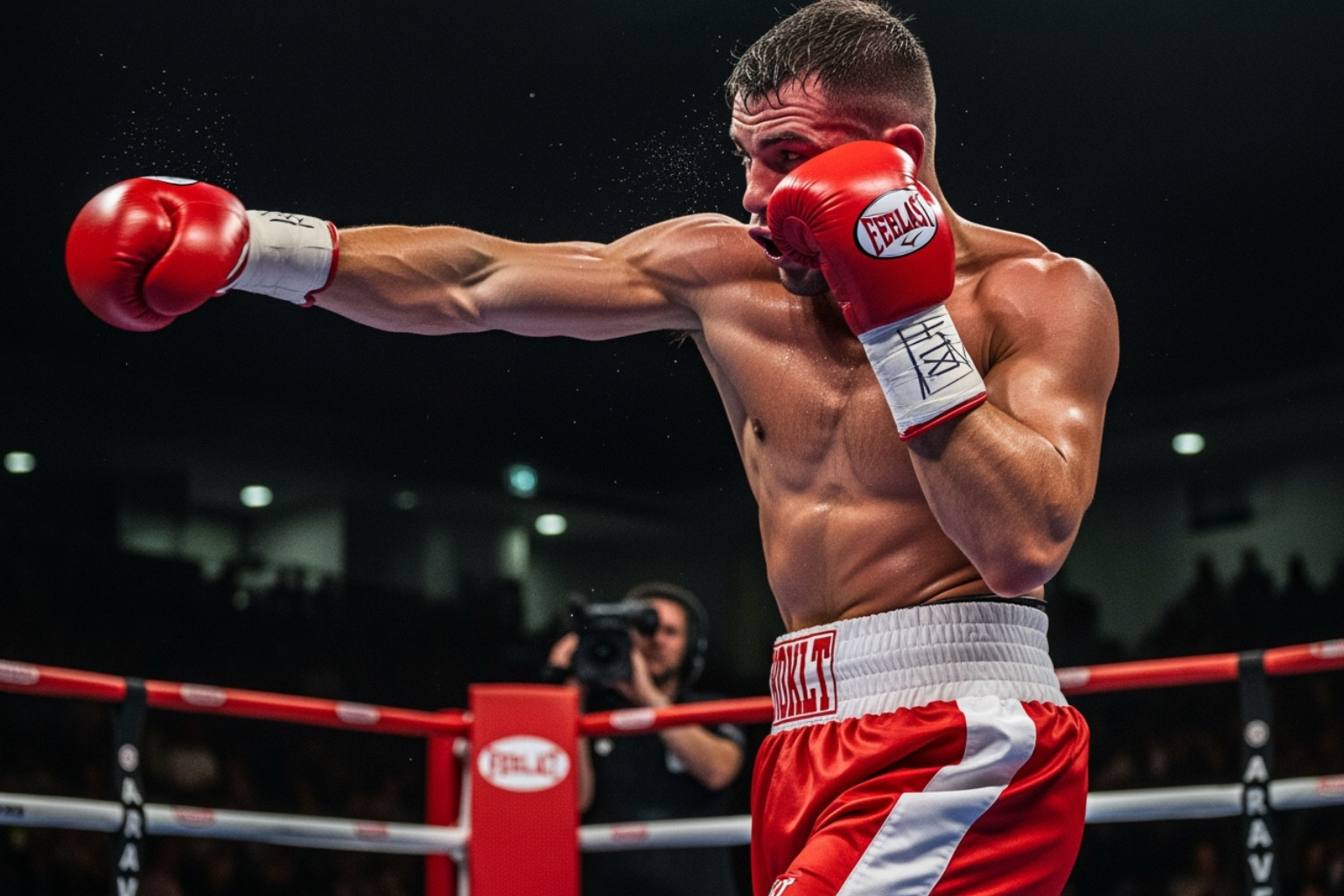
Cross Punching: Master 5 Perfect Steps
What is Cross Punching?
Cross punching is a powerful, straight punch thrown with your rear (dominant) hand, traveling directly from your chin to the target. It’s a fundamental and effective strike in boxing, kickboxing, and MMA, often called the “straight right” (or “straight left” for southpaws).
Quick Answer: How to Throw a Cross Punch
- Start in boxing stance – feet shoulder-width apart, rear foot angled, hands up.
- Push off your back foot – pivot and transfer weight forward.
- Rotate your hips and shoulders – this generates power.
- Extend your rear arm straight – keep your fist aligned with your forearm.
- Keep your lead hand up – protect your chin.
- Snap back to guard – return quickly to your defensive position.
Unlike the quick, setup-oriented jab, the cross is a power punch designed to do damage. Professional scoring systems like Compubox classify it as a power punch, and it’s responsible for countless knockouts in combat sports.
What makes the cross special is that it generates power from your entire body. The force starts from the ground, travels through your legs and hips, rotates through your core and shoulders, and explodes through your fist. This kinetic chain transforms a simple arm movement into a devastating strike.

Whether you’re training for fitness, self-defense, or competition, mastering the cross punch is essential. It’s the second punch you’ll learn after the jab and forms the foundation of the classic “one-two” combination. This guide will break down everything you need to know to perfect this fundamental technique.
The Cross vs. The Jab: Your 1-2 Punch Foundation
In boxing, the first combination you’ll learn is the famous “one-two”: a quick jab followed by a powerful cross punch. These two strikes work as a team, each with a distinct role.
The jab is your lead-hand punch, the one closest to your opponent. It’s a fast, light reconnaissance tool used to measure distance, set up power shots, and control the pace of a fight. The jab is about speed and control, not raw power.
The cross punch is your power shot, thrown with your rear (dominant) hand to inflict damage. Unlike the jab, the cross engages your entire body. Power is generated from your legs, hips, and core, channeling through your fist in one explosive motion.
In boxing’s numbering system, the jab is “1” and the cross punch is “2.” A “one-two” command means throwing a jab immediately followed by a cross. This fundamental combination pairs the jab’s setup with the cross’s finishing power.
Here’s how these two punches compare:
| Feature | Jab | Cross Punch |
|---|---|---|
| Hand Used | Lead hand (front) | Rear hand (back, dominant) |
| Power | Lower (primarily arm/shoulder) | High (full body rotation) |
| Speed | Faster, snappier | Slightly slower, more deliberate |
| Purpose | Setup, range-finding, defense | Power, knockout, finisher |
| Body Movement | Minimal rotation, forward lean | Significant hip and shoulder rotation |
| Number (System) | 1 | 2 |
The one-two combination is effective because the jab creates an opening for the cross. The jab distracts or forces a reaction from your opponent, and in that split second, the cross punch lands with force.
Understanding this difference is key: the jab is your probe, and the cross is your sledgehammer. Mastering both gives you the foundation for all other boxing techniques.
How to Throw the Perfect Cross: A Step-by-Step Guide
A powerful cross punch is a full-body movement, not just an arm swing. It’s a wave of energy that starts at your feet and explodes from your fist. We’ll walk you through each step of the cross punching technique.
The OOWEE app can help you practice with personalized, voice-guided training that gives you real-time cues over your favorite music. Learn more about OOWEE’s training features.

Step 1: Assume Your Fighting Stance
A solid stance is your foundation for power and balance. Without it, your cross punch will be weak and leave you off-balance.
- Feet: Position them shoulder-width apart. For an orthodox (right-handed) stance, your left foot is forward, and your right foot is back at a 45-degree angle. Southpaws do the reverse.
- Knees: Keep them slightly bent to stay mobile and generate power.
- Hands: Your lead hand is in front, ready to jab. Your rear hand protects your chin.
- Chin: Tuck it down toward your lead shoulder.
- Weight: Distribute it evenly or slightly on your back foot, staying light on the balls of your feet.
This stance is your launching pad for all offense and defense.
Step 2: The Role of Footwork and Pivot
The power of cross punching starts from the ground up. The energy begins in your feet.
- Push off the ball of your back foot as you start the punch. Imagine squishing a bug under your foot to get the right twisting motion.
- Pivot on the ball of your foot to allow your hips to rotate freely. This pivot open ups the power in your lower body.
- Transfer your weight from your rear foot to your lead foot as you rotate. This forward momentum adds significant force to your punch.
Proper footwork ensures balance and maximizes power. Without it, you’ll throw weak arm punches.
Step 3: Generate Power with Hip and Shoulder Rotation
Your hips and shoulders are the engine of the cross punch, amplifying the energy from your footwork.

- Rotate your hips toward the target as your rear foot pivots. Actively drive them forward with your core muscles.
- Your torso and shoulders follow immediately, rotating as a single unit. Your rear shoulder drives forward as your lead shoulder pulls back.
This rotation is what creates a powerful punch. The kinetic energy flows from your feet, through your hips, and into your torso. Your rear shoulder should rotate so far forward that it touches your chin, maximizing power and protecting your jaw.
Step 4: Extend and Connect
Now it’s time to release the energy through your fist.
- Extend your rear arm straight toward the target in a direct line.
- Punch through your target, not just at it, to ensure full commitment.
- Rotate your fist just before impact so your knuckles face upward. This aligns your wrist for strength and protection.
- Keep your lead hand glued to your chin throughout the punch. This is a crucial defensive habit.
Step 5: Snap Back to Guard
The punch isn’t over at impact. The retraction is just as important.
- Immediately snap your rear hand back to your chin along the same path.
- Rotate your hips and shoulders back to your original stance as your arm retracts. This resets your defense and balance.
A slow retraction leaves you open to counterattacks. A quick return to guard keeps you safe and ready for your next move. Mastering this full sequence is what makes cross punching so effective.
Mastering the Art of Cross Punching: Drills and Combinations
Understanding the mechanics of the cross punch is the first step; building muscle memory through practice is the next. Consistent training makes the movement instinctive. The OOWEE app can guide you with personalized, voice-guided drills that adapt to your skill level and play over your music.

Drills to Improve Your Cross Punching Technique
- Shadowboxing: Start here, preferably in front of a mirror. Throw the cross punch in slow motion, focusing on each element: foot pivot, hip rotation, shoulder drive, extension, and retraction. Gradually increase speed as your form improves.
- Heavy Bag Work: This is where you build power and endurance. Punch through the bag, using your whole body. Mix light, technical punches with full-power shots, always snapping back to guard.
- Mitt Work: Training with a partner or coach provides immediate feedback on accuracy, speed, and timing. This reactive training is invaluable for learning to respond to a moving target.
- Precision and Speed Drills: Mark spots on a heavy bag or use a double-end bag to improve accuracy and timing. For speed, throw rapid-fire crosses with less power, focusing on a quick snap and retraction.
Essential Cross Punching Combinations
A cross punch is rarely thrown alone. It’s most effective when set up by other strikes.
- Jab-Cross (1-2): The foundation of boxing. Use a quick jab to measure distance and create an opening, then immediately follow with a powerful cross. Practice until it’s one smooth motion.
- Jab-Cross-Lead Hook (1-2-3): This builds on the 1-2. After the cross, your body is perfectly positioned to throw a lead hook, attacking from multiple angles.
- Cross to the Body: A cross punch to the liver or solar plexus can be a fight-ender. Set it up with a jab to the head; when your opponent’s guard raises, drop your cross to their body.
- Using Feints: A fake jab or a subtle head movement can make an opponent react, creating an opening for your cross. When you see them flinch, throw the punch.
Practice these combinations slowly, focusing on technique before speed. Smooth transitions and a solid guard are paramount.
Common Mistakes to Avoid
Learning the cross punching technique involves correcting common mistakes. Recognizing these pitfalls will make your punch more powerful, prevent injury, and keep you defensively sound.
Dropping Your Lead Hand
This is a critical error. When you throw your rear-hand cross, it’s easy to drop your lead hand. The problem is that your lead hand is your shield. Dropping it exposes your jaw to a counter-punch.
The Fix: Keep your lead hand glued to your chin throughout the entire motion of the cross punch. Make this a non-negotiable, automatic habit.
Overextending or Leaning
Reaching for a target that’s too far away causes you to lose balance and telegraphs your punch. An off-balance fighter is vulnerable and easy to counter.
The Fix: Stay within your effective punching range. If a target is too far, use your footwork to close the distance before throwing your cross. Don’t compensate for poor positioning by overreaching.
Relying Only on Arm Strength
A common beginner mistake is to punch using only the arm. A powerful cross punch generates force from the entire body via the kinetic chain.
The Fix: Focus on the full-body rotation. Your arm is just the delivery system for power generated by your feet, legs, hips, and core. Feel the energy transfer from the ground up. This creates a much stronger punch with less effort.
Locking Your Joints
Tensing up and locking your elbow or knees makes your movements rigid and robs you of power. It also increases the risk of hyperextension injuries, especially at the elbow.
The Fix: Stay loose. Your knees should remain slightly bent. Your elbow should extend fully but never lock out at impact. Think of your body as a fluid whip, not a stiff bat. This allows for natural, powerful movement and absorbs shock.
Benefits of Mastering the Cross
Mastering the cross punch offers benefits that extend far beyond the ring, changing your body and sharpening your mind.
- Functional Strength: The cross is a full-body movement that builds practical, rotational power. It teaches your body to generate force from the ground up, strengthening your legs, core, and upper body in a way that translates to everyday activities.
- Full-Body Workout: Practicing cross punching is an efficient, high-intensity workout. It engages muscles throughout your body, burns calories, builds lean muscle, and improves cardiovascular health.
- Improved Coordination and Balance: Executing a proper cross requires a complex sequence of movements. This improves hand-eye coordination, balance, and overall body awareness, making you more agile in all aspects of life.
- Stress Relief and Mental Focus: The physical act of striking a heavy bag is a powerful outlet for stress. The focus required to perfect your technique provides mental clarity and improves concentration, acting as a form of active meditation.
- Increased Self-Confidence: As your technique improves and you feel the power in your cross, your self-confidence will grow. This sense of empowerment comes from knowing you can execute a powerful and effective movement.
- Strategic Advantage: In boxing, the cross punch is an indispensable weapon. It’s a primary knockout punch, a key part of the “one-two” combination, and a tool for breaking an opponent’s guard. A well-timed cross can change the course of a fight.
Mastering the cross makes you physically stronger, mentally sharper, and strategically smarter. It’s not just about learning a punch; it’s about becoming a more capable version of yourself. Read more about the cross in boxing
Conclusion: Release Your Power
You now have the blueprint for the cross punch. You understand its mechanics—from the stance and footwork to the full-body rotation and retraction—and the common mistakes to avoid. You know that its power comes not from the arm, but from a coordinated kinetic chain starting from the ground up.
Knowledge is only the first step. The real change happens through practice. Consistent repetition in shadowboxing, on the heavy bag, and with mitts is what builds instinct and turns technique into true skill. Mastering the cross punch will build functional strength, improve coordination, relieve stress, and boost your self-confidence.
This is your starting point. Whether you train for fitness, self-defense, or competition, the cross will be one of your most reliable tools.
You don’t have to train alone. The OOWEE app can be your virtual coach, providing voice-guided workouts with real-time cues to keep your form sharp while your music keeps you motivated. Discover how OOWEE transforms your training.
Take what you’ve learned, get into your stance, and let it fly. Your perfect cross punch is waiting to be released.