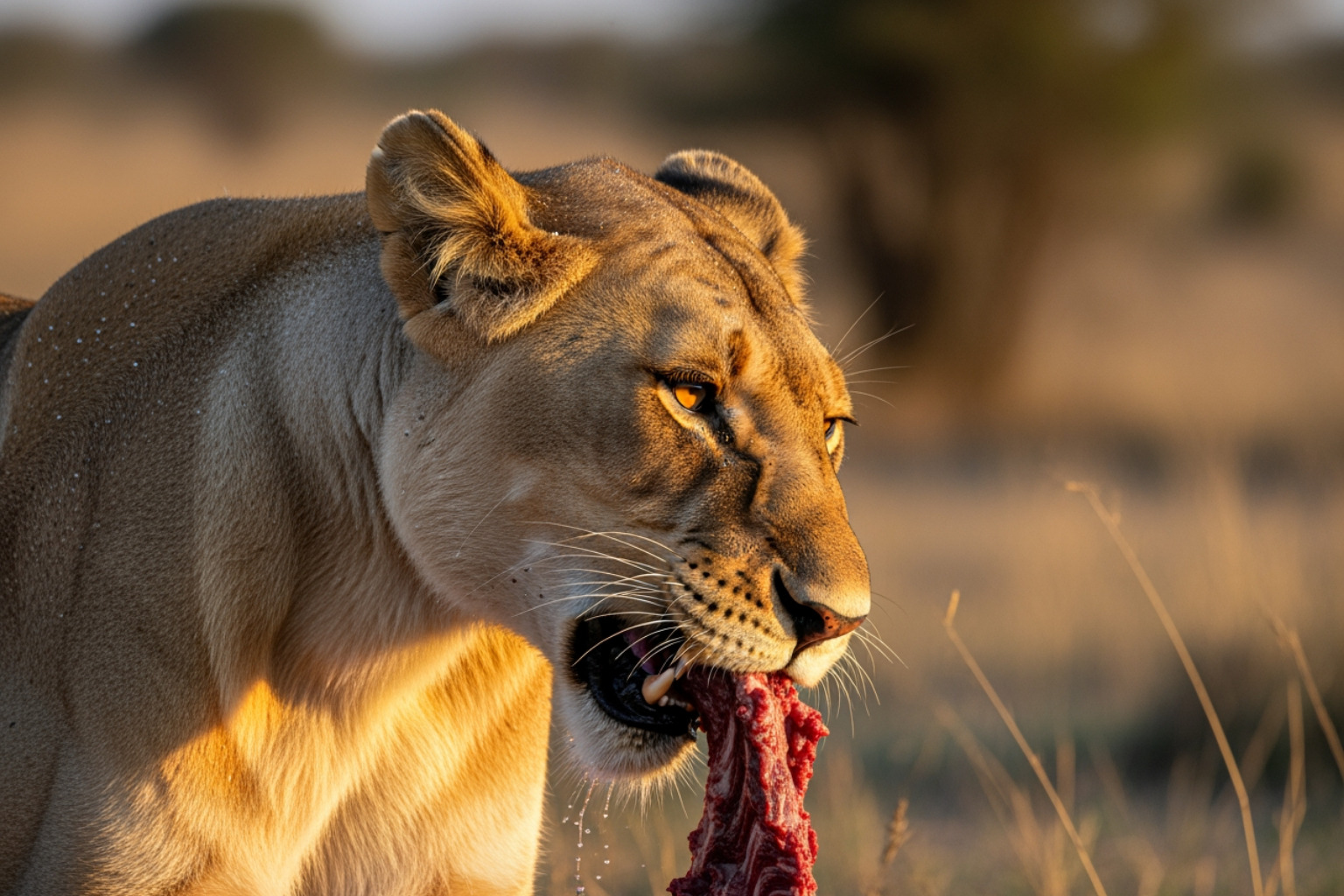
Big Cat Diet: The #1 Proper Science
Why Understanding Big Cat Diet Matters for Apex Predator Health
The big cat diet is exclusively carnivorous. As obligate carnivores, these apex predators require specific nutrients found only in animal flesh to survive and thrive.
Quick Facts About Big Cat Diet:
- What they eat: Whole prey animals, including muscle, organs, bones, and blood.
- How much: Lions can eat over 70 pounds in one sitting; tigers consume 40-60 pounds at once.
- Key nutrients: Taurine, preformed vitamin A, arachidonic acid, and arginine, all found exclusively in animal tissue.
- Feeding pattern: A feast-and-famine cycle with large meals followed by days of fasting.
- Hydration: Obtained primarily from prey, which is 70-80% water.
- Why meat-only: Their short digestive tracts and unique metabolism are designed for meat, not plants.
From the tiny rusty-spotted cat to the massive Bengal tiger, all felines are built to eat meat. Their sharp teeth, acidic digestive tracts, and unique metabolic needs make them true carnivores. Unlike omnivores, big cats cannot break down plant matter effectively or convert plant-based nutrients into the essential compounds their bodies require.
This biological imperative creates challenges for sanctuary and zoo nutritionists, who must replicate the nutritional profile of whole prey to ensure captive big cats receive everything needed for optimal health. A proper diet contains high protein and fat, specific calcium-to-phosphorus ratios, and calibrated vitamins and minerals, all delivered in ways that promote natural feeding behaviors.
I’m Marcus “The Jab” Johnson, and while my expertise is in training human fighters, the principles of proper nutrition for peak performance translate across species. Whether you’re studying the big cat diet or fueling your own body for combat sports, understanding what makes these animals thrive offers valuable lessons about the link between species-appropriate nutrition and peak physical form.
The Ancestral Menu: What Big Cats Hunt in the Wild
In the wild, the big cat diet is a masterclass in efficiency and adaptation, characterized by intense hunting and gorging, followed by fasting. This “feast and famine” cycle is deeply ingrained in their physiology.

From savannahs to jungles, the ancestral menu for big cats consists almost exclusively of other animals. This whole prey—muscle meat, organs, bones, skin, and blood—is what sustains these magnificent predators.
Lions: The Pride’s Feast
As the only truly social big cats, lions hunt cooperatively. A pride can take down prey much larger than themselves, such as zebras, wildebeests, and buffalo. This allows them to secure substantial meals, with a single lion gorging on over 70 pounds of meat in one sitting. After a hunt, a strict hierarchy determines who eats first, with dominant males preceding lionesses and cubs. This social dynamic means their diet is a balance of immense intake and subsequent fasting.
Tigers: Solitary and Powerful Hunters
Unlike lions, tigers are solitary hunters who master ambush and stealth. Their preferred prey includes medium to large animals like deer, wild boar, and wild cattle. A large male tiger can consume up to 15% of its body weight in a single meal—a whopping 40 to 60 pounds of meat. After securing a kill, a tiger often drags it to a secluded spot to eat, sometimes caching the leftovers for later. This protects their meal from scavengers and highlights the incredible strength required by their energy-demanding big cat diet.
Leopards: The Ultimate Opportunists
Leopards are perhaps the most adaptable of the big cats, with a diet spanning over 90 recorded species. They hunt everything from antelope and monkeys to rodents and reptiles, allowing them to thrive in diverse habitats. A leopard’s signature move is dragging its kill, often heavier than itself, up a tree. This incredible feat protects their food from scavengers like lions and hyenas, ensuring they can feast at their leisure.
Servals: Masters of the Small Hunt
Servals are medium-sized wild cats renowned for their exceptional hunting prowess with smaller prey. Their big cat diet consists mainly of rodents, birds, frogs, and insects. Using their large ears to pinpoint hidden prey, they can leap several feet into the air to snatch birds mid-flight. A single serval can kill thousands of rodents and hundreds of birds and snakes annually. While their prey is small, their efficiency makes them formidable predators.
The Biology of an Obligate Carnivore
To understand the big cat diet, we must look at their biology. All cats are “obligate carnivores,” a biological imperative, not a preference. Their entire physiology is adapted to process and thrive on animal flesh. For a deeper dive, comprehensive scientific research on feline nutrient requirements offers detailed information.
Essential Nutrients Found Only in Meat
Cats cannot synthesize certain vital nutrients from plant sources; they must come from animal tissues:
- Taurine: This amino acid is critical for heart function, vision, and reproductive health. A deficiency can lead to irreversible heart disease and blindness.
- Preformed Vitamin A: Unlike humans, cats cannot convert beta-carotene from plants into active Vitamin A (retinol). They require it preformed from animal sources like liver for vision and immune function.
- Arachidonic Acid: This essential fatty acid, vital for inflammation and skin integrity, must be obtained directly from animal fats.
- Niacin (Vitamin B3): Cats have a limited ability to produce niacin and need a direct dietary source, which meat provides.
- Arginine: This amino acid is vital for processing nitrogenous waste. A deficiency can quickly lead to severe ammonia toxicity.
Without these meat-exclusive nutrients, a cat’s health would rapidly decline, proving why a meat-only big cat diet is non-negotiable.
A Carnivore’s Digestive System
A big cat’s digestive system is a finely tuned machine for processing meat:
- Teeth for Tearing, Not Grinding: Sharp canines and scissor-like carnassial teeth are designed for piercing and shearing meat and bone. They lack flat molars for grinding plants.
- Short, Acidic Digestive Tract: A short gut allows for quick digestion of protein and fat, minimizing putrefaction. Exceptionally strong stomach acid breaks down bone and neutralizes bacteria in raw meat.
- Limited Carbohydrate-Digesting Enzymes: Cats produce very little amylase, the enzyme for breaking down carbs. Their bodies are designed to derive energy from protein and fat, not carbohydrates.
Hydration Through Prey
One fascinating aspect of the big cat diet is hydration. Wild big cats have a low thirst drive and get the vast majority of their fluid intake from their prey, which is naturally 70-80% water. When a cat eats its kill, it’s also ingesting a significant amount of moisture. This has led to the evolution of highly efficient kidneys that can concentrate urine to conserve water, a crucial adaptation for survival.
Replicating the Perfect Meal: The Complex Big Cat Diet in Captivity
Providing a proper big cat diet in an accredited sanctuary or zoo is a monumental task. It’s a delicate balance of scientific precision and respecting the natural instincts of these animals. It’s about replicating the nutritional complexity of a wild kill while providing mental and physical enrichment.

Zoo nutritionists and sanctuary staff work to ensure captive big cats receive diets that support their health and well-being, mimicking their natural diet as closely as possible.
The Role of Sanctuary Nutritionists
Sanctuary nutritionists are critical to the health of captive big cats. They formulate balanced meals that meet the specific needs of each species, considering the delicate balance of proteins, fats, vitamins, and minerals. A suitable diet for most cat species contains 45–50% protein and 30–35% fat. They replicate wild nutrition using commercial foods, whole prey, and supplements, while constantly monitoring each cat’s health and adjusting diets for age, health, and activity levels.
Building a Balanced Captive Big Cat Diet
Creating a balanced captive big cat diet involves several key components:
- Commercial Carnivore Diets: Many facilities use high-quality, fortified commercial diets designed to be nutritionally complete.
- Whole Prey: To provide enrichment and a more complete nutritional profile, sanctuaries incorporate whole prey like rabbits or chickens. This provides muscle, organs, bones, and fur.
- Muscle and Organ Meats: Raw meats like beef or chicken form the bulk of the diet, while organ meats like liver and heart provide crucial micronutrients.
- Bone-in Meals: To provide calcium and promote dental health, bone-in meals (like oxtails or chicken necks) are essential. Chewing on bones cleans teeth and strengthens jaw muscles.
- Scheduled Fasting Days: Mimicking the wild feast-and-famine cycle, many facilities incorporate one to two fasting days per week for healthy adult cats to maintain appetite and prevent obesity.
Beyond the Bowl: The Importance of Feeding Enrichment
Feeding in captivity is about behavior as well as nutrition. In the wild, hunting provides significant mental and physical stimulation. To prevent boredom, enrichment strategies make big cats “work” for their food.
This can involve hiding food around the enclosure, using puzzle feeders, or providing whole carcasses. These techniques encourage problem-solving, reduce stress, and allow cats to engage in species-appropriate behaviors like ripping and tearing, which are vital for their psychological well-being.
Common Mistakes and Health Risks in Feline Nutrition
While the principles of a big cat diet seem straightforward—meat, meat, and more meat—providing optimal nutrition is complex and fraught with potential pitfalls. The USDA provides valuable guidelines on feeding non-domestic cats, highlighting the importance of proper diet to prevent serious health issues.

The Dangers of an Improper Big Cat Diet
When a big cat’s diet is wrong, the consequences are severe:
- Metabolic Bone Disease (MBD): This devastating condition occurs from a lack of dietary calcium. Muscle meat alone is low in calcium, so without bones or proper supplementation, the body leaches calcium from its own skeleton, leading to weak, brittle bones and deformities.
- Vitamin and Nutrient Imbalances: A lack of taurine can cause irreversible heart failure and blindness. Too little preformed Vitamin A can cause vision problems, while too much (often from overfeeding liver) can be toxic.
- Obesity in Captivity: Reduced activity levels and overfeeding can lead to obesity, causing joint problems, pressure sores, and other health complications.
- Poisoning from Euthanized Animals: A critical risk is poisoning from barbiturates if feed animals were euthanized with these chemicals, which can remain in the carcass and be toxic.
Debunking Myths: Why Cats Can’t Be Vegetarians
The idea of a vegetarian or vegan diet for any cat is a dangerous misconception. As established, cats are obligate carnivores.
- The “Obligate Carnivore” Rule: This is a fundamental biological truth. Their metabolism is geared entirely toward processing animal protein and fat.
- Inability to Process Plant Matter: Cats lack the necessary enzymes and digestive tract length to extract nutrients from plants. A plant-based diet leads to digestive upset and malabsorption.
- The Myth of Carbohydrates: Cats have no dietary requirement for carbohydrates. High-carb diets can contribute to obesity and other health issues in both domestic and big cats.
Raw vs. Commercially Prepared Diets
The debate between raw and commercial diets is complex. Proponents of raw feeding argue it best mimics the ancestral big cat diet, providing unprocessed nutrients and high moisture content. However, raw diets carry a risk of bacterial contamination (e.g., Salmonella) and can be dangerously unbalanced if not formulated correctly. Commercially prepared diets offer convenience and nutritional completeness, but some find them less enriching for the animal. The choice requires expert knowledge, rigorous hygiene, and constant monitoring.
Frequently Asked Questions about Big Cat Diets
Let’s address some common questions about the unique nutritional needs of these incredible animals.
How much does a big cat eat in one sitting?
Big cats are built for impressive consumption, reflecting their feast-and-famine lifestyle. The amount varies by species:
- Lions can gorge on over 70 pounds of meat at once to sustain them between successful hunts.
- Tigers can consume up to 15% of their body weight, which can be 40 to 60 pounds for a large male.
These large meals are typically followed by several days of fasting. In captivity, intake is carefully controlled to prevent obesity. For example, a 500-pound lion might eat about 15 pounds of food per night.
Can a big cat survive on a vegetarian diet?
Absolutely not. Big cats, and all felines, are obligate carnivores. Their bodies are biologically dependent on nutrients found exclusively in animal flesh.
- They cannot synthesize essential nutrients like taurine and preformed vitamin A from plant sources.
- Their digestive systems are not equipped to break down plant matter efficiently.
- Attempting to feed a big cat a vegetarian diet would lead to severe nutritional deficiencies, organ failure, and a painful, premature death. Their survival hinges on a meat-based big cat diet.
What can we learn from big cat diets for our pet cats?
Domestic cats share the same fundamental biology as their larger relatives. The principles of the big cat diet offer invaluable lessons for pet cat nutrition:
- High-Protein, High-Moisture, Low-Carb Diet: Like tigers, domestic cats thrive on diets rich in animal protein and fat, with minimal carbohydrates, which helps prevent obesity and diabetes.
- Benefits of Wet Food for Hydration: Wild cats get most of their water from prey. Domestic cats retain this low thirst drive, so dry kibble can lead to chronic dehydration. A high-moisture diet (wet food) better mimics their natural hydration method.
- The Ancestral Diet Concept: Understanding the big cat diet reinforces that our pets are obligate carnivores whose health is optimized when their diet reflects their evolutionary heritage—one centered around animal flesh.
Conclusion
The big cat diet is a testament to nature’s incredible design—a perfectly calibrated system that transforms prey into the raw power and majestic presence of these apex predators. From the intricacies of their digestive systems to their absolute reliance on meat for essential nutrients, every aspect of their biology underscores their obligate carnivorous nature. Whether hunting in the wild or carefully managed in accredited sanctuaries, the goal is always the same: to provide the precise nutritional fuel these animals need to thrive.

Understanding the complexity of providing proper nutrition in captivity, from replicating whole prey to implementing feeding enrichment, highlights the critical link between diet and health. Just as a lion’s raw strength or a tiger’s explosive power is built on a foundation of species-appropriate nutrition, your own peak physical form requires the right fuel and the right training.
At OOWEE, we believe in open uping your inner apex predator. Our app provides expert-guided combat sports workouts, including Boxing and Muay Thai, designed to help you train like a champion. With customizable workouts and vocal cues that seamlessly integrate with your background music, you’ll be fueling your body and honing your skills to achieve your own peak physical condition.
Explore our features and find how OOWEE can help you train with the power and precision of a big cat.