Kick Boxing Home Gym: Your Ultimate 2025 Dream Setup!
Why a Kickboxing Home Gym is Your Best Fitness Investment
A kick boxing home gym transforms any spare room or garage into your personal training sanctuary. Tired of crowded classes and rigid schedules? Imagine training on your time, perfecting your technique without an audience.
Here’s what you need to get started:
- A punching bag (free-standing or hanging)
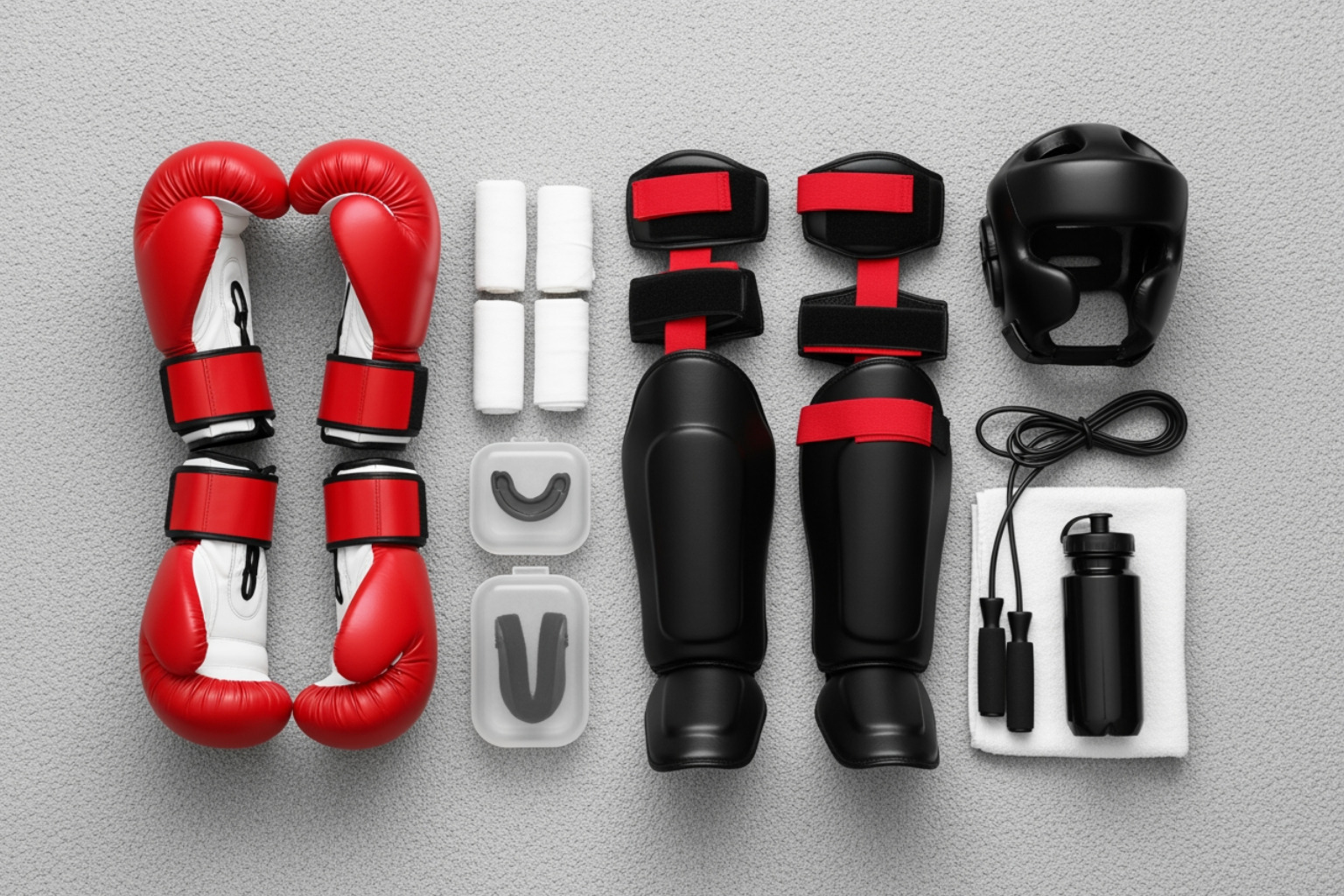
- Boxing gloves and hand wraps
- Protective flooring
- About 8-10 feet of clear space
A complete setup can cost between $300-900, saving you hundreds each year compared to gym memberships.
Kickboxing is a powerhouse workout. Research shows an 8-round session can burn over 480 calories, building full-body strength while clearing your mind. Unlike other sports, you don’t need a massive space. A spare corner is often enough if you know what equipment matters and how to use it safely.
This guide will walk you through every step—from choosing the right gear to designing your space and building effective workout routines. Whether you’re a beginner or an experienced striker, you’ll learn how to create a home gym that fits your space, budget, and goals.
Why Choose a Home Kickboxing Gym?
Imagine this: it’s 5:30 AM, and instead of rushing to a class, you’re warming up in your own space. Or it’s 9 PM, and you’re getting in a session after a long day. That’s the beauty of a kick boxing home gym—it fits into your life.
The convenience and flexibility are transformative. No more planning around class schedules or waiting for equipment. This freedom makes consistency, the key to results, much easier.
Let’s talk money. While there’s an initial investment, commercial gym memberships can cost $600-$1,800 annually. Your home setup is a one-time purchase that pays for itself within a year, saving you serious money long-term.
Then there’s the privacy and customization. Your home gym is a judgment-free zone where you can experiment with new combinations and push your limits. You can set up your gear exactly how you like it, choose your flooring, and blast your favorite music without headphones.
Of course, the why of kickboxing matters too. It’s a full-body workout that engages your core, legs, arms, and shoulders. You’ll build cardiovascular endurance, burn serious calories (over 480 in an 8-round session), and develop functional strength.
The mental benefits are just as powerful. Hitting a bag is incredibly therapeutic. The focus required for proper technique creates a form of moving meditation, building mental clarity and discipline that extends far beyond your workout.
The Unbeatable Benefits of Kickboxing
Regular kickboxing training delivers remarkable changes:
- Cardiovascular Health: The varied intensity of punching, kicking, and footwork acts like interval training, boosting heart health and stamina.
- Full-Body Strength: Every strike builds functional strength. Your shoulders and arms power punches, your core generates rotational force, and your legs and glutes drive kicks.
- Balance and Coordination: What feels awkward at first—like a roundhouse kick—soon becomes a precise, controlled movement, improving your overall coordination.
- Self-Defense Skills: While fitness is the goal for most, you’re learning genuine striking and defensive techniques, which builds confidence.
- Mental Focus: You can’t zone out. Learning combinations and maintaining form requires concentration, training your brain alongside your body.
Gearing Up: Your Essential Kickboxing Equipment
Building a kick boxing home gym doesn’t require a massive budget. You can get an incredible workout with just a few key pieces, and you don’t have to buy everything at once. Start with the essentials and add more as you progress.
Consider buying used equipment from local marketplaces to stretch your budget, but always inspect items for safety and functionality. Prioritize protecting your hands—they are your most important tools.
Choosing Equipment for Your Kick Boxing Home Gym
Let’s break down what you need.
The Essentials:
- Punching Bag: The heart of your gym. We’ll cover types next.
- Boxing Gloves (12-16 oz): Crucial for protecting your hands and wrists from impact.
- Hand Wraps: These non-negotiable strips of fabric go under your gloves to provide vital wrist support and knuckle protection.
- Jump Rope: An old-school tool for cardio, footwork, and agility that takes up almost no space.
Optional Add-ons:
- Protective Gear: Shin guards, headgear, and a mouthguard are important if you plan to do any partner drills.
- Resistance Bands: A versatile, space-saving tool for strength and conditioning work.
The Great Debate: Punching Bag Types
Choosing the right bag comes down to your space and training style.
Free-standing bags are the most popular choice for home gyms. They’re portable, require no installation, and are designed for both punches and kicks. The main trade-off is that they can move or tip with very powerful strikes if the base isn’t heavy enough (a quality bag base filled with sand can weigh over 300 pounds). You also miss the natural swing of a hanging bag.
Hanging heavy bags offer the classic boxing gym experience, swinging like a real opponent to provide dynamic feedback. They are built for power and can withstand years of heavy use. However, installation is complex and requires a sturdy ceiling mount or a dedicated stand. They also demand significant dedicated space (an 8-10 foot radius) and can be noisy.
| Feature | Free-Standing Bags | Hanging Heavy Bags |
|---|---|---|
| Pros | – Portable: Easy to move and store. |
- No Installation: Simple setup without drilling.
- Kick-Friendly: Designed for low kicks. | – Realistic Swing: Mimics a moving opponent.
- Built for Power: Excellent for heavy striking.
- Durable: Withstands long-term, heavy use. |
| Cons | – Can Move/Tip: May shift with powerful strikes. - Less Swing: Offers less dynamic feedback.
- Stability Varies: Quality matters for a good experience. | – Complex Installation: Requires a sturdy mount.
- Needs Space: Requires a large, dedicated area.
- Noisy: Can create significant noise and vibration. |
Specialized bags can supplement your training. Muay Thai bags are longer for practicing low kicks and knees. Speed bags are small, air-filled bags that build hand-eye coordination and rhythm. Reflex bags have a spring-loaded base to improve reaction time and defensive movement.
Designing Your Perfect Kick Boxing Home Gym Space
You don’t need a warehouse for an effective kick boxing home gym. A corner of a bedroom, basement, or even a covered patio can become a functional training area.

Start by assessing your space. Can you throw a full roundhouse kick without hitting a wall? You’ll want at least 8-10 feet of clear space around your bag for footwork and combinations. Also, check your ceiling height, especially for a hanging bag. Even with a free-standing bag (which can be around 67 inches tall), you need enough vertical room to move comfortably.
Good ventilation is crucial. A stuffy room makes for an uncomfortable workout. Position your gym near a window or fan to keep the air fresh. If you plan to use training apps, also ensure you have a strong WiFi signal in your chosen spot.
Flooring and Safety Foundations
What’s under your feet is as important as what you’re hitting. Hard floors amplify impact on your joints. Rubber mats or foam tiles are your best solution. They absorb shock, provide excellent traction, and protect your floor from sweat and damage.
Install them carefully, ensuring there are no gaps or uneven edges that could cause a twisted ankle. For durable flooring designed for martial arts, you can check out options from specialized retailers like Century Mats.
Safety First in Your Kick Boxing Home Gym
At home, you are your own coach, so building good safety habits is essential.
- Warm-Up and Cool-Down: Always start with light cardio and dynamic stretches to prepare your body. End your workout with 5-10 minutes of stretching to aid recovery and improve flexibility.
- Technique Over Power: Especially when starting, focus on proper form to avoid injury. Sloppy technique is a fast track to strains. Power will come naturally as your form improves.
- Equipment Maintenance: Regularly inspect your bag for rips, check that your bag’s base is stable, and look over your gloves for worn padding. Catching problems early prevents bigger issues.
- Keep it Clean: Your gear absorbs sweat. Wipe down your bag after each session, air out your gloves completely, and wash your hand wraps regularly to prevent bacteria buildup.
Your At-Home Kickboxing Workout Plan
Having a kick boxing home gym is the first step; consistent training is what brings results. A structured routine that blends drills, cardio, and strength work is key.
We recommend starting with 3-4 training sessions per week. This gives your body time to adapt while you build a solid foundation. A balanced approach is best: some days for technique, some for cardio, and some for strength. This variety keeps workouts interesting and develops you as a complete athlete.
Learn how it works with OOWEE—our mobile app delivers personalized, voice-guided Boxing and Muay Thai training that adapts to your skill level and goals, with vocal cues that seamlessly integrate with your background music.
Drills, Routines, and Progression
Mastering the fundamentals is your foundation. Start with your basic stance and footwork, practicing movement in all directions. Next, focus on your fundamental punches (jab, cross, hook, uppercut) and basic kicks (front kick, roundhouse kick), prioritizing quality form over power.
Shadowboxing is an invaluable drill for refining technique and footwork without a bag. When you move to heavy bag drills, combine your strikes into sequences (e.g., jab-cross-hook-roundhouse kick) to work on power, speed, and endurance.
Here’s a sample beginner weekly workout schedule:
- Day 1: Technique & Cardio. Warm-up, 3 rounds of shadowboxing, 5 rounds on the heavy bag focusing on form, 3 rounds of jump rope, cool-down.
- Day 2: Strength & Core. Warm-up, bodyweight exercises (push-ups, squats, planks), resistance band work, dedicated core routine, cool-down.
- Day 3: Active Recovery. Light stretching, a walk, or yoga.
- Day 4: Combinations & Power. Warm-up, 8 rounds on the heavy bag focusing on 2-3 strike combos, cool-down.
- Day 5: Rest.
- Day 6: Full-Body Conditioning. A circuit mixing cardio, strength, and bag work. Keep intensity high with good form. Cool-down.
- Day 7: Rest.
Integrating Technology and Advancing Your Skills
Technology has transformed what’s possible in a kick boxing home gym. Smart trackers and training apps provide guidance and feedback that was once only available from a personal coach.
Many systems use trackers to measure your output in real time, tracking metrics like speed and volume. This data shows you exactly how you’re progressing and allows you to set goals to beat your personal records.
Training apps are central to the modern home workout. They offer thousands of on-demand classes led by experienced trainers, so you’ll never run out of fresh challenges. These apps provide structured paths to systematically progress you from beginner to advanced combinations.
This is where OOWEE shines. Our mobile app provides personalized, voice-guided Boxing and Muay Thai training that integrates with your background music. The vocal cues guide you through drills while your favorite songs keep you motivated—it’s like having a coach in your ear.
As your skills develop, you can take on more complex combinations and higher intensity training. App-based training grows with you, ensuring you’re always challenged. The goal is to make your home training as effective and engaging as possible. With the right technology, you have a personal coach and an extensive workout library right in your pocket.
Conclusion
Building your kick boxing home gym is about creating a space that empowers you to train on your terms. We’ve covered how to assess your space, choose the right gear, set it up safely, and train smart with a structured routine.
Your home gym removes every excuse—no commute, no crowds, just you and your goals. The privacy, customization, and long-term savings make it an unbeatable investment in your fitness.
But the best equipment is useless without consistency. A structured plan is crucial for staying motivated.
That’s where the OOWEE app comes in. It’s designed for home fighters, offering personalized, voice-guided Boxing and Muay Thai workouts that adapt to your skill level. Vocal cues guide you through combinations while your music plays, creating a seamless and energizing training session.
Your kick boxing home gym is more than a workout space—it’s your sanctuary for stress relief and your path to becoming stronger, inside and out.
