Cross Vital 2025 Impact
Understanding the American Red Cross: More Than Just a Symbol
The cross symbol on a white background represents one of America’s most trusted humanitarian organizations, but what exactly does the American Red Cross do? Here’s what you need to know:
Core Services of the American Red Cross:
- Disaster Relief – Provides shelter, food, and support during emergencies like hurricanes, floods, and home fires
- Blood Services – Collects and distributes blood for surgeries, cancer treatment, and trauma care
- Health & Safety Training – Offers CPR, First Aid, and lifeguarding certification
- Military Family Support – Assists service members and their families during crises
- International Humanitarian Aid – Partners with global Red Cross networks to help people worldwide

Most people recognize the red cross symbol from first aid kits or disaster coverage on the news. But the organization does far more than emergency response.
Founded by Clara Barton in 1881, the American Red Cross started by helping wounded soldiers during the Civil War. Today, it responds to a disaster somewhere in the United States every eight minutes. That’s over 60,000 disasters each year, from house fires affecting single families to hurricanes impacting entire states.
The organization runs on volunteers. About 90% of Red Cross workers are unpaid volunteers who donate their time to help neighbors in crisis. They’re everyday people – teachers, students, retirees, and yes, even athletes who want to give back between training sessions.
Whether you’re looking to donate blood, learn CPR, volunteer your time, or just understand where your donations go, this guide breaks down everything the Red Cross does and how you can get involved.
The History and Mission of the American Red Cross
The American Red Cross began with one determined woman who refused to look away from suffering. Clara Barton was a nurse during the U.S. Civil War, and what she saw changed her life. Soldiers were dying not just from their wounds, but from the chaos and lack of organized medical care on the battlefields.
Barton didn’t wait for someone else to fix the problem. She went directly to the front lines, often under fire, bringing supplies and comfort to wounded soldiers. Her courage earned her the nickname “Angel of the Battlefield.”

After the war, Barton learned about the International Red Cross Movement, which had started in Switzerland in 1863. The movement was built on a simple but idea: wounded soldiers and the people helping them should be protected during wartime, no matter which side they were on.
Barton saw that America needed this kind of organization. She spent years convincing government leaders to sign the Geneva Conventions, the international treaties that protect wounded soldiers and civilians during war. In 1881, she finally succeeded, and the American Red Cross was born.
The cross symbol itself tells a story. It’s the Swiss flag flipped – a red cross on white instead of a white cross on red. This honors Switzerland as the birthplace of the movement and represents neutrality and protection. When people see that red cross, they know help is coming, no politics attached.
But Barton didn’t stop with wartime aid. She pushed for the Red Cross to also respond during peacetime disasters like floods, fires, and hurricanes. This expansion became part of the organization’s Congressional charter and remains central to its mission today. You can learn more about these foundational principles at The Geneva Conventions and the Red Cross Movement.
The Seven Fundamental Principles
The Red Cross operates on seven core principles. These aren’t just nice words on a poster. They’re the rules that guide every decision, from how volunteers respond to house fires to how the organization works in war zones.
Humanity drives everything. The goal is simple: prevent and ease human suffering, protect life and health, and treat every person with dignity.
Impartiality means helping people based on need, not nationality, race, religion, wealth, or politics. The person suffering the most gets help first, period.
Neutrality is what lets the Red Cross reach everyone. By staying out of political, religious, and ideological fights, the organization can cross battle lines and help people on all sides of a conflict.
Independence keeps the Red Cross effective. While it works with governments and follows the law, it stays autonomous so it can always act according to its principles, not political pressure.
Voluntary service is the backbone of the organization. Most Red Cross workers are unpaid volunteers who give their time because they want to help, not for money or recognition.
Unity means there’s only one Red Cross Society per country, open to everyone, working throughout the entire nation.
Universality ties it all together. The Red Cross and Red Crescent Movement spans the globe, with every society sharing equal status and responsibility to help each other.
From Civil War Battlefields to Modern Crises
The Red Cross has never stopped evolving. What started as battlefield medicine during the Civil War quickly grew to include disaster relief. Clara Barton’s vision of helping during peacetime emergencies proved essential time and again.
During both World Wars, the Red Cross supported troops and their families, collected blood donations, and helped prisoners of war. The organization became a trusted presence during the hardest moments in American history.
That trust continued into modern times. After the September 11th attacks, Red Cross volunteers were among the first responders, providing food, shelter, and emotional support to thousands. The same happened during Hurricane Katrina, Superstorm Sandy, and countless wildfires across the West.
But here’s what most people don’t realize: the majority of Red Cross responses aren’t to major disasters. They’re to home fires, which happen every day in communities across America. A family loses everything in minutes, and within hours, Red Cross volunteers arrive with emergency funds, temporary housing, and a caring presence.
The work has gone global too. The Red Cross partners with international Red Cross and Red Crescent societies to fight disease outbreaks, improve healthcare in underserved areas, and respond to crises affecting millions worldwide. That red cross symbol means the same thing whether it’s in Kansas or Kenya: help is here, no strings attached.
From Civil War tents to modern emergency shelters, from battlefield surgery to community blood drives, the mission remains unchanged. The methods just keep getting better.
Disaster Relief: A Guide of Hope in Crisis
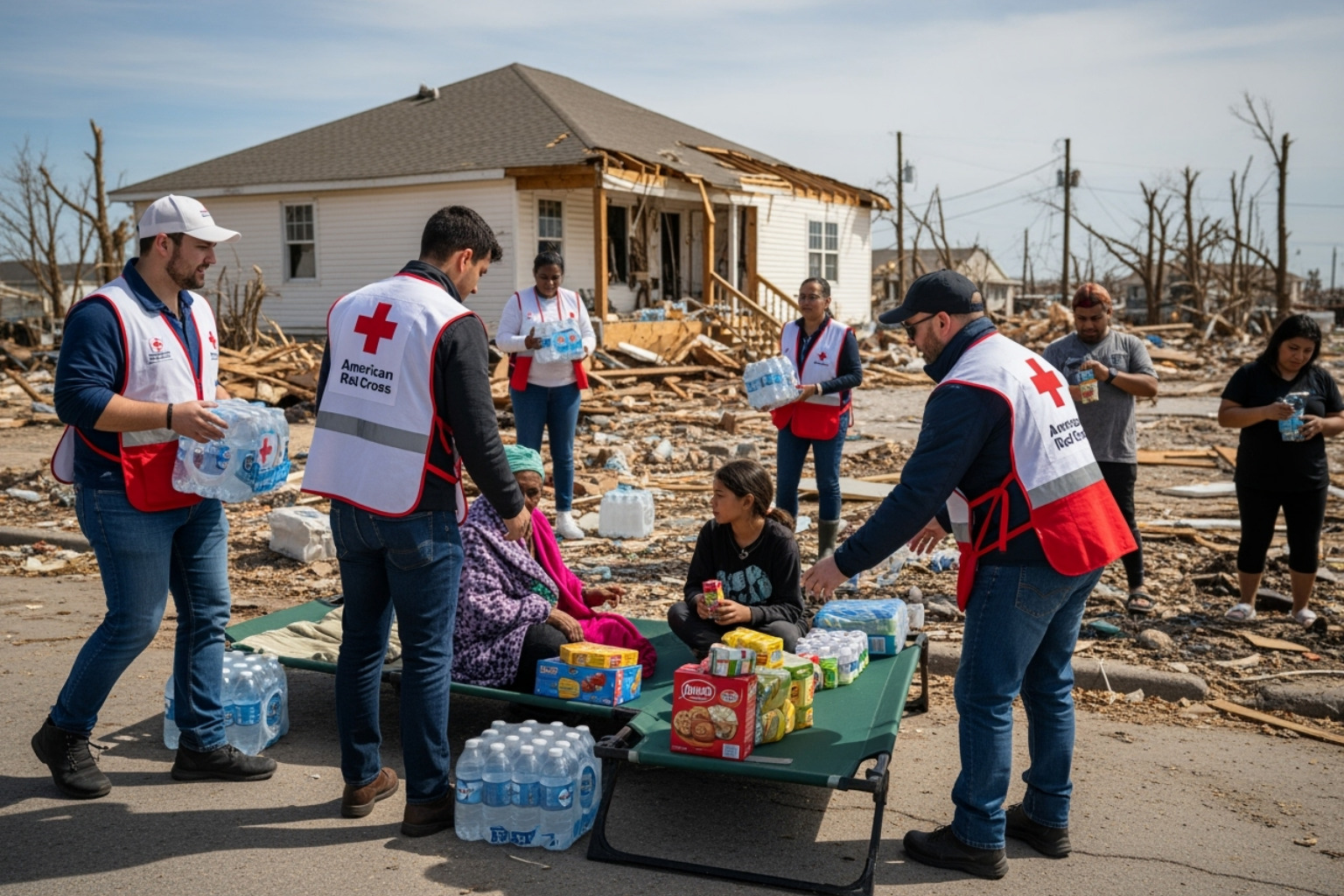
When a hurricane tears through a coastal town, when wildfires consume neighborhoods, when floods swallow homes, when tornadoes rip communities apart, or when a family watches their house burn down—the American Red Cross shows up. Often within hours. Sometimes within minutes.
It’s in these moments of absolute chaos that the cross symbol becomes more than just a logo. It becomes a lifeline.

Imagine losing everything you own in a single night. Your clothes, your photos, your sense of security—gone. This is where Red Cross disaster relief begins. We open emergency shelters where families can sleep safely. We provide hot meals and clean water. We distribute basic supplies like blankets and toiletries.
But here’s what many people don’t realize: we also provide health services and mental health support. Because surviving a disaster isn’t just about having a place to sleep. It’s about processing the trauma of watching your life disappear. It’s about finding the strength to take the next step when you don’t even know what that step should be.
The physical needs are urgent, yes. But the emotional wounds? Those can last much longer if left unaddressed.
The Role of the Disaster Action Team
Behind every Red Cross response is a group called the Disaster Action Team, or DAT. These are your neighbors. Teachers, office workers, retirees, students. Regular people who’ve trained for this moment.
They’re on call 24 hours a day, 7 days a week. When a house fire happens at 2 AM, they get the call. When a small tornado touches down and damages a dozen homes, they respond. They don’t wait for the news cameras to show up—in fact, most of what they do never makes the news at all.
DAT volunteers arrive with immediate comfort: a warm blanket, a listening ear, practical help. They provide financial assistance to help families cover urgent expenses like clothing, food, and a hotel room for a few nights. It’s not a fortune, but it’s enough to help someone take that first breath and think, “Okay, I can get through this.”
This is neighbors helping neighbors at its finest. The red cross on their vest isn’t just a symbol—it’s a promise that you’re not alone.
Preparing Communities Before Disaster Strikes
The best disaster response? The one that prevents the disaster from being as bad in the first place.
That’s why the Red Cross doesn’t just show up after emergencies. We work year-round to make communities stronger and more prepared. We teach preparedness education—how to build an emergency kit, how to create a family communication plan, what to do in those critical first moments when disaster strikes.
One of our biggest initiatives is the Home Fire Campaign. Every year, thousands of Americans die in home fires, many because they didn’t have working smoke alarms. So we partner with local fire departments to go door-to-door, installing free smoke alarms and teaching fire safety. It’s simple, but it saves lives.
We also run youth programs that teach kids and teens about disaster preparedness and humanitarian values. Because building community resilience means investing in the next generation. When a ten-year-old learns CPR or understands what to do in an earthquake, that knowledge stays with them for life.
Think of it like training. Just as you wouldn’t step into a boxing ring without preparation, you shouldn’t face a disaster without a plan. The Red Cross helps communities train for the worst, hoping they’ll never need it—but ready when they do.
Lifesaving Services Beyond Disasters
When you think of the Red Cross, disaster relief probably comes to mind first. But here’s something you might not know: the organization touches lives every single day through services that have nothing to do with hurricanes or floods. These programs quietly save lives, teach critical skills, and connect a global network of helpers who show up when people need them most.
Why the Red Cross Needs Blood Donors
Every two seconds, someone in America needs blood. That’s not a dramatic exaggeration—it’s the reality hospitals face every day.
The American Red Cross supplies about 40% of the nation’s blood and blood products. Think about what that means: nearly half of all blood used in surgeries, cancer treatments, and emergency rooms comes from Red Cross donors. Someone recovering from a car accident, a child fighting leukemia, a mom delivering twins with complications—they all depend on volunteer donors rolling up their sleeves.

The donation process is straightforward. You’ll answer some health questions, sit back in a comfortable chair, and donate for about 8 to 10 minutes. The staff makes sure you’re comfortable the whole time, and there’s usually juice and snacks afterward (because you just did something amazing).
Basic requirements to donate blood:
- Be at least 17 years old (16 with parental consent in some states)
- Weigh at least 110 pounds
- Be in good general health
- Pass a brief health screening
- Haven’t donated whole blood in the last 56 days
One donation can save up to three lives. That’s three people who get to go home to their families, three stories that continue because you took an hour out of your day. It’s one of the most direct ways to help your community—no special skills required, just a willingness to help.
Health and Safety Training with the Red Cross
Imagine being the person who knows what to do when someone collapses. Not panicking, not freezing, but actually helping. That’s what Red Cross training gives you—the confidence to act when it matters most.
The Red Cross offers training in CPR certification, First Aid, and AED training (that’s the device that can restart someone’s heart). These aren’t just courses for medical professionals. They’re designed for everyone: parents, teachers, coaches, office workers, athletes training between workouts. Anyone who might witness an emergency and want to help rather than feel helpless.
Beyond the basics, there are specialized courses too. Lifeguarding certification for those watching over pools and beaches. Babysitting courses that teach young people how to care for children safely. Each class focuses on practical skills you can use immediately—how to stop bleeding, recognize a stroke, help someone who’s choking.
The cross on your certification card means you’ve been trained by one of the most trusted names in emergency response. More importantly, it means you’re ready to be the person who steps up.
Want to learn more? Check out more info about Training and Certification to find classes near you.
The Global Red Cross and Red Crescent Network
The American Red Cross doesn’t work alone. We’re part of something much bigger—a worldwide movement that includes 192 National Red Cross and Red Crescent Societies across the globe.
This network operates through three main organizations. The International Committee of the Red Cross (ICRC) works in conflict zones, protecting people caught in war and ensuring that even in the worst situations, humanitarian rules are followed. The International Federation of Red Cross and Red Crescent Societies (IFRC) coordinates when disasters strike, making sure help arrives quickly and effectively.
Together, this network responds to global conflicts, aids refugees fleeing violence, and reconnects families separated by war or disaster. The red cross (or red crescent in some countries) is recognized everywhere as a symbol of help, neutrality, and hope. It opens doors in places where almost nothing else can.
When a refugee family crosses a border with nothing but the clothes on their backs, when an earthquake levels a city halfway around the world, when families lose contact during conflict—the Red Cross and Red Crescent Movement is there. It’s humanity helping humanity, no matter where the crisis happens or who needs help.
This global reach means that when you volunteer, donate, or give blood locally, you’re part of something that spans the entire world. Your local action connects to a movement that’s been serving people for over 160 years, guided by those seven fundamental principles that put human dignity first, always.
Frequently Asked Questions about the American Red Cross
People often wonder about how the Red Cross operates, especially when they’re considering donating or volunteering. These are great questions, and we want to be completely transparent about who we are and how we work.
Is the American Red Cross a government agency?
Here’s something that surprises many people: the American Red Cross is not a government agency. We’re actually a non-profit organization that operates independently from the government.
You might be wondering why there’s confusion about this. Well, we do have a Congressional charter that outlines our humanitarian responsibilities, and we work closely with government agencies during disasters. But that charter doesn’t make us part of the government. It simply recognizes our role and gives us a special mandate to help Americans in crisis.
This nongovernmental status is actually crucial to our mission. It allows us to maintain the independence and neutrality that are fundamental to our principles. We can focus purely on helping people based on their needs, not political considerations.
During major disasters, we partner extensively with FEMA, local emergency management teams, and public health departments. These partnerships ensure coordinated responses when communities need it most. But the red cross remains a symbol of independent humanitarian action, free from political influence.
How are financial donations to the Red Cross used?
When you donate to the Red Cross, you deserve to know exactly where your money goes. This is something we take seriously because your trust matters to us.
The vast majority of every dollar you donate goes directly into program services. This means real, tangible help for people in crisis. Your donation funds disaster relief efforts, providing everything from emergency shelter and hot meals to long-term recovery assistance that helps families rebuild their lives.
A significant portion also supports our blood services infrastructure. Collecting, testing, storing, and distributing blood safely requires sophisticated facilities, trained staff, and careful logistics. This life-saving work depends on donor support.
Like any organization, we do have fundraising and management costs. These cover essential operations like recruiting volunteers, maintaining technology systems, and yes, raising the funds we need to keep serving communities. We work hard to keep these costs reasonable while maintaining effectiveness.
We’re committed to public accountability. Organizations like Charity Navigator evaluate our financial practices and give us ratings based on transparency and fiscal responsibility. We encourage you to check these independent assessments. They provide detailed breakdowns of how we use donations and how we compare to other charities.
When disaster strikes, your generosity directly translates into help for families in their darkest moments. That’s a promise we take to heart every single day.
Who can volunteer for the Red Cross?
Here’s one of our favorite facts: about 90% of Red Cross workers are volunteers. That means when you see someone responding to a disaster or helping at a blood drive, chances are they’re a neighbor who decided to give back.
The beauty of volunteering with us is that there truly are diverse opportunities for everyone. You don’t need special skills or a medical background to make a difference. Whether you’re a student looking for meaningful experience, a retiree with time to share, or someone juggling a full-time job who wants to help on weekends, we have a place for you.
Maybe you’d enjoy being a blood donor ambassador, greeting people at blood drives and helping them feel comfortable during their donation. Or perhaps you’re drawn to direct disaster response as a Disaster Action Team member, ready to respond when a family loses their home to fire. Some volunteers prefer office administration, helping behind the scenes with scheduling, data entry, and coordination that keeps everything running smoothly.
We’re also passionate about engaging youth volunteers. Young people bring incredible energy and fresh perspectives to our work. Our youth programs help build leadership skills while fostering a lifelong commitment to service.
The commitment level is flexible. Some volunteers are on-call for emergencies, while others contribute a few hours each week on a regular schedule. We provide comprehensive training for every role, so you’ll feel confident and prepared.
If you’ve ever thought about volunteering but weren’t sure how, now’s the time. The red cross represents the collective power of everyday people choosing to help their neighbors. That could be you.
Conclusion
Throughout this guide, we’ve seen that the American Red Cross is so much more than that familiar red cross symbol on a white background. It’s a living, breathing network of compassion that touches lives every single day.
From Clara Barton’s vision on Civil War battlefields to today’s sophisticated disaster response teams, the Red Cross has evolved while staying true to its core mission: helping people in their darkest moments. Whether it’s providing shelter after a hurricane, collecting the blood that saves a cancer patient’s life, teaching someone CPR who might one day save their neighbor, or supporting military families through difficult deployments, the organization shows up when it matters most.
None of this happens without people. The volunteers who leave their warm beds at 2 AM to comfort a family whose home just burned down. The donors who roll up their sleeves to give blood. The everyday Americans who contribute what they can to help strangers they’ll never meet. That’s what makes the Red Cross work. That’s what makes it powerful.
We believe in the strength that comes from preparation and community support. Just as OOWEE helps you build physical and mental resilience through personalized training in Boxing and Muay Thai, the Red Cross builds resilient communities ready to face whatever challenges come their way. Both missions are about empowering people to be stronger, more capable, and ready to help others.
The beauty of the Red Cross is that there’s a place for everyone. Maybe you’re someone who wants to volunteer but can only spare a few hours a month. Maybe you’re ready to donate blood for the first time. Maybe you’re in a position to make a financial contribution. Whatever your capacity, your involvement matters. It genuinely makes a difference in someone’s life.
So we encourage you to take that next step. Explore what volunteering looks like. Schedule that blood donation you’ve been thinking about. Learn CPR so you’re ready if someone needs help. The red cross represents all of us at our best, coming together to help our neighbors.
Get involved with the Red Cross today and become part of something bigger than yourself. Because when disaster strikes, when emergencies happen, when people need help, the Red Cross is there. And with your support, it always will be.